| |
| Wednesday, 11 November 2026 |
| Hot Stuff! The Birth of Studio Glass |
| Mark Hill |
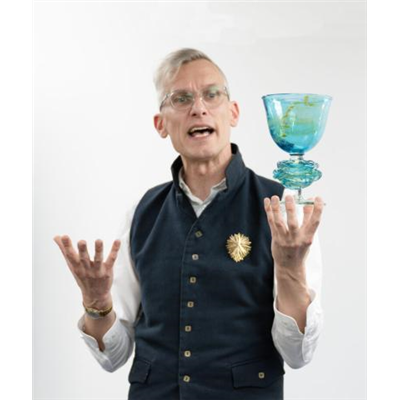 |
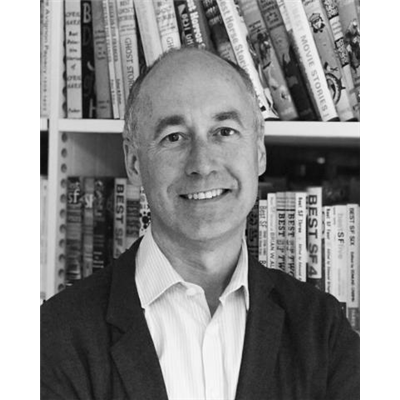
Although glass has been made for centuries, the 1960s saw a revolution in the way it was made, opening it up to artists across the world and allowing glass to be used as a medium for art. After looking at the historical context and the genesis of the movement, I examine the work of six key glass artists from the US and the UK, including Dale Chihuly, Sam Herman, and Peter Layton. Containing previously unseen photographs taken at the time, this talk also includes my top tips and an overview of the market today and the creative journey made by studio glassmakers so far.
Studied History of Art & Architecture (BA Hons), and began his career as a porter and Junior Cataloguer at Bonhams, before moving to Sotheby's where he was a Specialist in the Collectors' Department. Became director of an internet company forming and running a ground-breaking deal with eBay Live Auctions. Was co-author of the internationally published Collectables Price Guide with Judith Miller from 2002-17. Founded his own publishing company in 2005 and has published over 15 books on emerging specialist subjects in the decorative arts. A Miscellaneous expert on the BBC 'Antiques Roadshow' since 2007 and an expert on the BBC's 'Antiques Roadtrip', has also co-presented five primetime TV series on antiques and collecting for BBC2. A member of the British Antiques Dealers' Association (BADA.org). Senior Vice President at a company offering digital solutions to the antiques industry. Has lectured across the world, including at the V&A in London, and contributed to many newspapers, magazines, radio and TV programmes. A Freeman of the Worshipful Company of Arts Scholars and a Freeman of the City of London. |
|
| Wednesday, 09 December 2026 |
| Christmas - Backstage at Covent Garden. |
| Sarah Lenton |
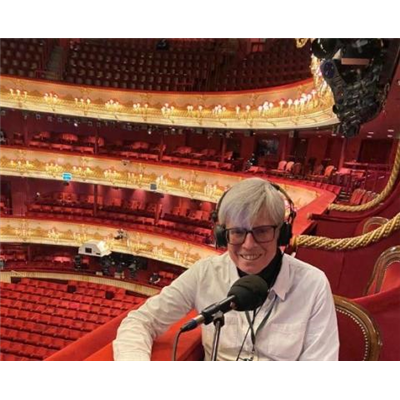 |
Every year the Royal Opera House puts on a season of Christmas shows: the Royal Ballet in Nutcracker and Cinderella, the Royal Opera in any piece with a folk tale theme, and either genre if it features snow. How do we cope with all those magic coaches and snow bags? Not to say 17 Sugar Plums, 12 Princes, and the entire Lower Ballet School backstage? This talk takes you into the wings, down the traps and under the stage as our legendary Christmas Tree is moved on to its lift. Based on interviews and live video clips, it is updated every year.
Sarah Lenton has spent her working life in the theatre: her principal employers are the Royal Opera House, English National Opera, Glyndebourne Festival Opera and Garsington Opera. She writes programme articles, radio and play scripts, gives lectures on the operas and ballets in the rep. and broadcasts regularly for BBC Radios 3 and 4. She is also a cartoonist. |
|
| Wednesday, 13 January 2027 |
| Priceless Peggy – Peggy Guggenheim |
| Alexandra Epps |
 |
Peggy Guggenheim was the 'poor little rich girl' who changed the face of twentieth century art. Not only was she a woman ahead of her time but also one who helped to define it. She discovered and nurtured a new generation of artists producing a new kind of art. Through collecting not only art, but often the artists themselves, her life was as radical as her collection.
Official Guide and Lecturer at Tate Modern, Tate Britain and the Guildhall Art Gallery. Qualified Guide to the City of London, offering walks, talks and tours about many aspects of the arts for societies, corporations and private individuals. Member of the City of London Guide Lecturers Association. Co-author of the book Lord Mayor's Portraits 1983-2014 (2015). Alexandra’s background is in design having practised as a graphic designer running her own design consultancy for many years. BA Saint Martins School of Art, MA London College of Printing. |
|
| Wednesday, 10 February 2027 |
| Thomas Gainsborough a Life: surprising resemblance and perfection. |
| Matthew Morgan |
 |
2027 will be the 300th anniversary of the birth of Thomas Gainsborough. Gainsborough was unquestionably one of the greatest portrait painters that Britain has ever produced. His ability to capture the inner lives of his sitters, his dramatic use of paint and his remarkable approach to colour set him apart from almost all of his contemporaries. Yet, although he was regarded in his lifetime as one of the preeminent portrait painters of his day, the genre that he truly loved was landscape. In this lecture we will look at the life and work of this unique artist, his experimental technique and his fraught relationship to portraiture, the genre in which he excelled.
I am an independent art historian, educator, and museum professional with a passion for sharing the joy of art. Over the years, I have spoken on subjects ranging from Caravaggio to Kehinde Wiley, though my first love remains the work of J.M.W. Turner and my primary focus is European painting of the 18th and 19th centuries. My career has been dedicated to helping people connect with art in meaningful and enjoyable ways, whether through lectures, exhibitions, or creative learning programs. I have lectured widely across Britain and Europe, in settings as diverse as universities, festivals and cathedrals as well as Galleries such as the National Gallery, the Royal Collection, the Wallace Collection, the Courtauld Institute and the Victoria and Albert Museum. My degree is from Cambridge, I studied at the Courtauld for my MA and my PhD is from Birkbeck, University of London. As Museum Director, I had the privilege of running Turner’s House in Twickenham, dedicated to the great landscape painter. Bringing Turner’s art to new audiences was one of the most rewarding experiences of my career. I have taught for more than eight years at Birkbeck, University of London, and served as Head of the London Learning Team at the Royal Collection. At the National Gallery, I devised and delivered a wide range of learning events, and earlier in my career I worked as a Director in the Valuations Department at Christie’s. Beyond museums, I have contributed to TV documentaries, podcasts, and radio programs, and created a series of short films about paintings available on YouTube. When I’m not immersed in art, you’ll find me enjoying my extensive jazz record collection—usually with a glass of red wine in hand. |
|
| Wednesday, 10 March 2027 |
| The Faberge Imperial Easter Eggs before the Revolution. |
| Toby Faber |
 |
Tells the story of the making of the Fabergé Imperial Easter Eggs: both the artistry and creativity that they embody, and how their designs link to the history of the last two Romanov Tsars Between 1885 and 1916, Carl Fabergé made fifty jewelled eggs – Easter presents from Russia’s last two emperors to their wives. They have become the most famous surviving symbols of the Romanov Empire: both supreme examples of the jeweller’s art and the vulgar playthings of a decadent court. Given almost total artistic freedom, Fabergé and his designers had to conform to only three rules: that each year’s Easter present should be egg-shaped, that it should contain some surprise to amuse or delight its recipient, and that it should be different from any predecessor. The result was a series of creations demonstrating ingenuity and creativity for which there are few parallels in any other field. Their styles range from traditional Russian to Art Nouveau, and their materials from carved hardstone to exquisite enamelled gold. Their maker’s relentless search for novelty also means that they provide a fabulously quirky illustrated history of the decline of the Romanovs. Toby Faber wrote Fabergé’s Eggs: One Man’s Masterpieces and the End of an Empire, described by P.D. James as a ‘fascinating story which combines unique decorative art, contemporary culture, history and the murder of the Romanovs with the excitement of a crime novel’. The lecture is illustrated with pictures of the Romanovs and their palaces, and, of course, with photographs of the eggs themselves.
Toby is an experienced lecturer and public speaker who has been accredited by The Arts Society since 2012. His career began with Natural Sciences at Cambridge and has been through investment banking, management consulting and five years as managing director of the publishing company founded by his grandfather, Faber and Faber, where he remains on the board. He is also non-executive Chairman of its sister company, Faber Music and a director of Liverpool University Press. Toby has written three narrative histories: Stradivarius – Five Violins, One Cello and a Genius; Faberge’s Eggs; and Faber & Faber – The Untold Story, as well as a novel, Close to the Edge. Of these, only the obvious one is published by the family firm. |
|
| Wednesday, 14 April 2027 |
| Not in Front of the Audience: the Story of Stage Censorship. |
| Malcolm Jones |
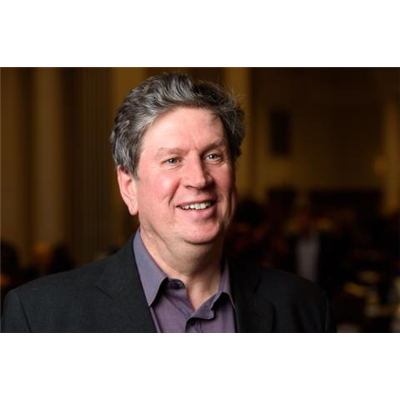 |
On September 26 1968, after 231 years of official censorship, Britain ended the power of the Lord Chamberlain to decide what the British public should and shouldn’t see. Official vetting and censoring of plays was established by the Theatres Licensing Act of 1737 and led to years of controversy, absurdity and fascinating battles between the theatre makers and the authority of the Theatre Censor.
Malcolm has lectured on the Victoria & Albert Museum Short Course and Year Course Programmes since 2009, devising and developing a range of courses on Theatre History and Practice. Malcolm was Workshop and Events manager at the V&A Theatre Museum in Covent Garden for 10 years where he was responsible for lectures, Study Days and workshops for adults and interviewed many leading British actors and directors including Kenneth Cranham, Zoe Wanamaker, Barry Cryer, June Whitfield and Don Black. He has lectured and led workshops in the past at many drama schools including RADA, The Actors Centre and Rose Bruford College. He has also lectured on theatre for groups visiting the UK from America. He has chaired panels and post show talks for Ambassadors Theatre Group. While at the V&A Malcolm contributed as a speaker on theatre to many television and radio programmes. He also works with Age Exchange Community Arts since 2000 on many creative arts programmes with older people and intergenerational film and theatre projects. |
|
| Wednesday, 12 May 2027 |
| Golden Age of Comedy. |
| Tylor Butterworth |
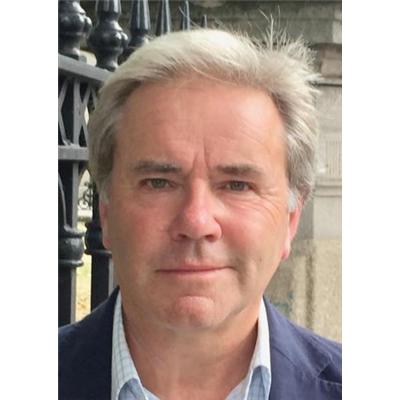 |
It’s said in our theatrical history that there was a Golden Age of British Comedy. It ran from the 1970’s to the 1980’s and occurred as we started to drift away from theatres and radios, and found ourselves living through a wonderfully rich period of television comedy. Some say this period has never been bettered. In this unashamedly affectionate and entertaining lecture, and sharing his personal and family connection with this world, Tyler will go back and revisit those wonderful comedy programmes and the people who were in them. He will unravel the formula for tv comedy success, and how it made us laugh like we did. And he will look at how the world of Variety was kept alive by the comedians and the double acts who managed to leap successfully from the stage into our televisions. This is a lecture that will bring back many fond memories as we revisit a key part of our country’s theatrical heritage
Tyler Butterworth grew up in a theatrical family and spent twenty five years as an actor working extensively in film, television, theatre and radio. He then worked as a development producer in television documentaries. Now, he produces walking audio guides to cities across Europe for private clients. He lives in Sussex where he walks on the South Downs and the South Coast. |
|
| Wednesday, 09 June 2027 |
| Ways to Look at Painting. |
| Alice White |
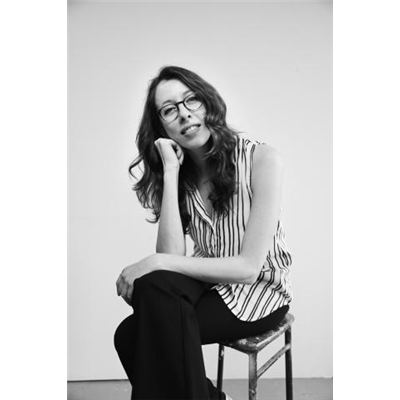 |
Alice provides a painter’s perspective on famous artworks from the 17th to the 21st centuries. Rembrandt and Turner are revealed as artistic risk-takers, whose new combinations of glazes, surfaces, pigments and processes re-defined the language of painting. These two forefathers of experimentation lead the way for modern artists such as Pollock and Fontana, who went beyond the brush, the canvas, and the gallery wall itself in search of the meaning of making. Explore the mess and methodology of the creative process: from broken brushes to smudged thumbmarks, raw pigment to secret sketchbooks, slashed canvases to immersive light installations, this lecture uncovers a new way of seeing painting.
Alice White is a contemporary oil-painter, and a Tutor at Central St Martins College of Art (UAL) and University College London. She has provided Guest Lectures at King's College London, The Art Workers' Guild, the Courtauld Institute of Art. Her essay 'A Painter's Perspective' is published in Alfred Cohen: An American Artist in Europe (Alfred Cohen Art Foundation and Ben Uri Gallery 2020). Her article ‘How to Look at Painting’ was printed in The Art Society Magazine (July 2020). Alice’s solo show 'A New Wave' documented her year’s residency as Artist for Animals at ZSL London Zoo. Recent projects include 'The Art of Science' (Scott Polar Institute, University of Cambridge 2021). She regularly exhibits at the Mall Galleries in London. |
|